Popular Pets
🐶 Dog 🐱 Cat 🐰 Rabbit 🐹 Hamster 🐾 Guinea Pig 🦜 Parrot 🦡 Ferret 🐀 Rat 🐭 Chinchilla 🦔 Hedgehog 🐟 Goldfish 🦜 Macaw
Farm & Large Animals
🐴 Horse 🐄 Cow 🐄 Highland Cow 🐷 Pig 🐑 Sheep 🐐 Goat 🐴 Donkey 🦙 Alpaca 🐐 Mountain Goat 🐔 Chicken 🦆 Duck 🦃 Turkey
Wild Animals
🐘 Elephant 🦁 Lion 🐯 Tiger 🐆 Leopard 🐺 Wolf 🐻 Bear 🐻‍❄️ Polar Bear 🦍 Gorilla 🐒 Chimpanzee 🦧 Orangutan 🦘 Kangaroo 🐾 Capybara 🦒 Giraffe 🦊 Fox 🦅 Raptor 🦉 Owl 🐧 Penguin 🦩 Flamingo 🐾 Hyena 🐾 Meerkat 🦥 Sloth 🦡 Badger 🐾 Wolverine 🐾 Armadillo
Ocean & Aquarium
🦈 Shark 🐋 Orca 🐬 Dolphin 🐋 Whale 🐋 Blue Whale 🐳 Beluga Whale 🦄 Narwhal 🐋 Bowhead Whale 🐾 Manatee 🐟 Manta Ray 🐟 Freshwater Fish 🐠 Saltwater Fish 🐴 Seahorse 🐟 Koi
Exotic & Weird
🐍 Snake 🐍 Ball Python 🦎 Bearded Dragon 🦎 Iguana 🦎 Komodo Dragon 🦎 Chameleon 🦎 Leopard Gecko 🐢 Tortoise 🐢 Snapping Turtle 🐢 Sea Turtle 🐊 Crocodilian 🕷️ Tarantula 🦎 Axolotl 🐙 Octopus 🌊 Jellyfish 🦞 Lobster 🐚 Quahog 🔬 Tardigrade
Info
About FAQ Contact
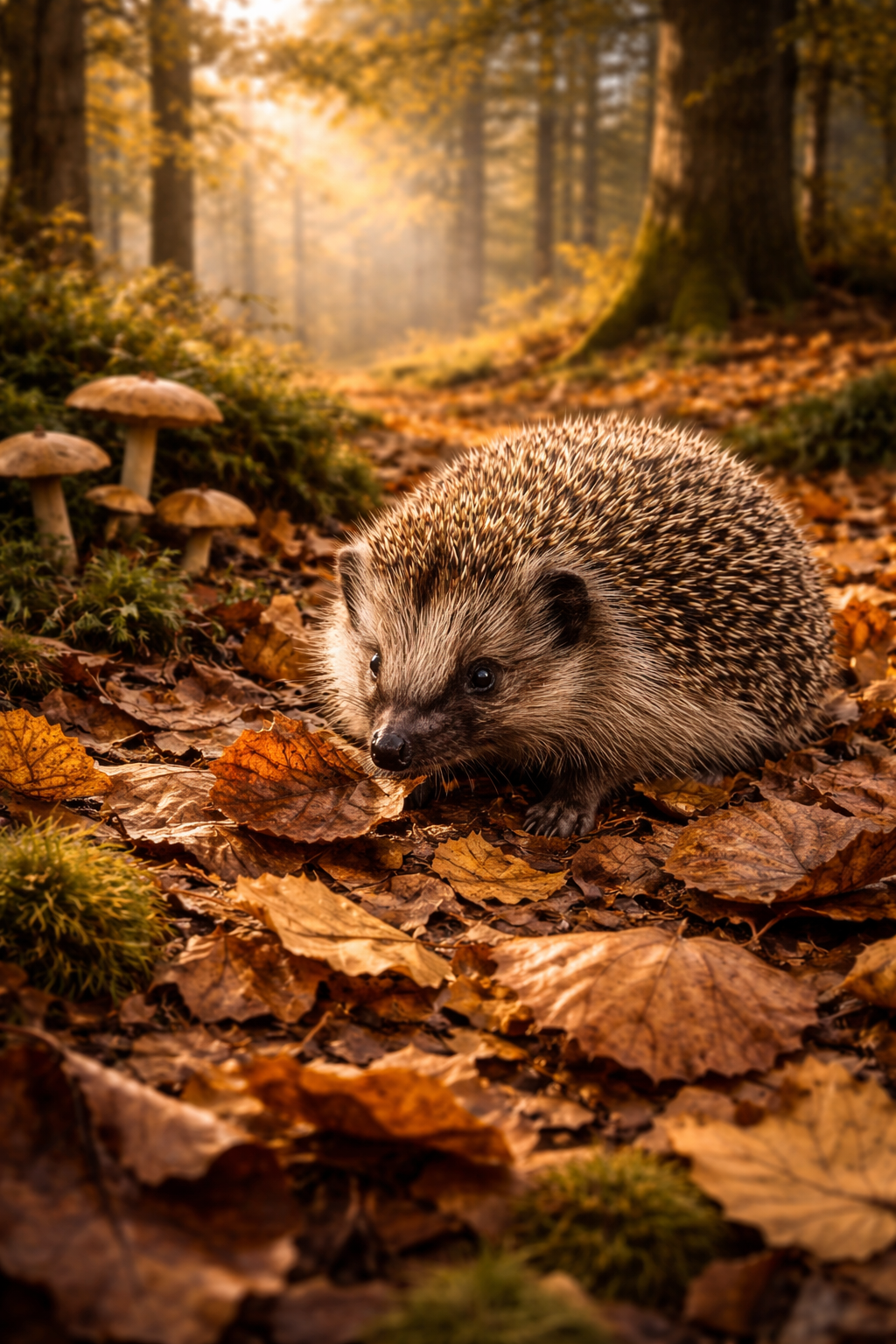
Photorealistic painting of a hedgehog in autumn forest
🦔 Exotic Pets

How Old Is a Hedgehog in Human Years?

📅 Updated 🔬 4–7 yr lifespan 🦔 Unchanged for 15 million years

Hedgehogs have been navigating the night with 5,000 individually controlled quills for 15 million years. They self-anoint with toxic substances for reasons nobody fully understands. They are immune to adder venom. And they are sold as starter pets for children.

Calculate Hedgehog Age →
🦔 Hedgehog Age in Human Years
in human years
Hedgehog age
Life stage
Type
🦔 What this age means

Hedgehog Age to Human Years — Full Table

Hedgehogs age rapidly — a 3-year-old African pygmy hedgehog is approaching what we would consider senior years. Based on an average captive lifespan of 5 years.

Hedgehog AgeAfrican Pygmy (pet)European (wild)Life Stage
3 months~8 yrs~9 yrsHoglet
6 months~14 yrs~17 yrsJuvenile
1 year~22 yrs~27 yrsYoung adult
2 years~36 yrs~46 yrsPrime adult
3 years~50 yrs~66 yrsMature / Senior (wild)
4 years~62 yrs~80 yrsSenior (pet) / Elder (wild)
6 years~80 yrsExceptionalElder (pet)
9 yearsRecord territoryExtraordinary

🦔 The oldest verified pet hedgehog was Bertie, owned by Mark Tebb of Silkstone, South Yorkshire, UK, who lived to 9 years and 6 months and was recognised by Guinness World Records. Most African pygmy hedgehogs live 4–6 years; those reaching 8+ are genuinely exceptional. Wild European hedgehogs typically live 3–5 years, though individuals reaching 8–10 years have been documented in suburban environments with less predation pressure and more reliable food access.

The Life Stages of a Hedgehog

Hedgehogs are solitary, nocturnal, and have changed remarkably little in 15 million years — a testament to the effectiveness of their basic design. Their developmental milestones are rapid in early life and their lifespan is short, but the combination of 5,000+ individually controlled quills, toxin immunity, and hibernation capability makes them one of the most self-sufficient small mammals in European ecosystems.

0–2 wks
Hoglet
Born blind and deaf in litters of 4–5. The first set of soft white spines emerges within hours of birth — a fluid-filled layer under the skin retracts to reveal them, protecting the mother during delivery. Eyes open at 2 weeks. Already one of the most self-sufficient mammal neonates for their size.
2–6 wks
Early Juvenile
Eyes and ears open. Beginning to forage with the mother on short nocturnal expeditions. Adult brown spines replacing the baby whites. Self-anointing behaviour begins at this stage — chewing novel substances and spreading the foam across their quills, a behaviour whose function remains genuinely unknown.
6 wks–6 mo
Juvenile
Independent from around 6 weeks. Must reach minimum 600g before first hibernation or they won't survive winter. This autumn weight-gain race is critical — many hoglets born late in the season don't make the threshold in time. The British Hedgehog Preservation Society runs autumn rescue programmes specifically for underweight juveniles.
6 mo–2 yrs
Young Adult
First hibernation survived — a major physiological achievement. Sexually mature. Males nomadic during breeding season (May–September in UK), travelling up to 2km per night. In captivity, establishing wheel habits and diet patterns that will define health for the rest of their life.
2–4 yrs
Prime Adult
Peak condition and established territory. Experienced forager and hibernator. Wild hedgehogs at this stage have survived multiple hibernations — each one a significant physiological challenge involving heart rate dropping to just 20 beats per minute. In captivity, the most active and engaging period.
4–6 yrs
Senior
Health monitoring becomes essential. Wobbly Hedgehog Syndrome can manifest from 2–3 years onward; obesity-related conditions increase. Regular weight checks catch issues early. Activity may slow but curiosity and personality remain. A hedgehog reaching this stage has had outstanding care.
6–10 yrs
Elder
Extraordinary longevity. Bertie of South Yorkshire lived to 9 years and 6 months — a Guinness World Record. Wild elders are almost unheard of given road mortality and predation. In captivity, every comfortable evening is a small miracle. Warmth, easy food access, and minimal stress are the priorities.

Things About Hedgehogs That Will Actually Surprise You

🌿 Self-Anointing — Nobody Knows Why
One of the most genuinely mysterious behaviours in mammalogy: hedgehogs regularly encounter a novel-smelling substance, chew or lick it into a foamy saliva mixture, then contort their spine into an extraordinary backwards-reach to spread the froth across their own quills. This is called self-anointing, and it has been documented with an astonishing range of substances — toxic toads, cigarette butts, perfume, leather, paint, and hundreds of plants. The function is entirely unknown despite decades of study. Leading hypotheses include scent camouflage (masking their own odour), chemical deterrence (coating quills with toxic substances), parasite control, and sexual signalling — none has been confirmed. It occurs in every captive hedgehog regardless of source, suggesting it is deeply instinctive. A 1985 study in the Journal of Mammalogy documented self-anointing with 68 different substances, still without a conclusive explanation.
🦔 5,000–7,000 Individually Controlled Quills
An adult hedgehog carries 5,000–7,000 quills, each attached to its own separate erector muscle — meaning every single quill can be raised or lowered independently. The quills are modified hairs made of keratin, hollow to reduce weight, and each is anchored by a rounded base that sits in a flexible ball-and-socket follicle — this prevents them from acting as rigid levers and snapping under pressure. Unlike porcupine quills, hedgehog quills are smooth, cannot be fired, and do not detach — a predator must physically pull them out. Under threat, a ring of muscle (the orbicularis panniculi) contracts around the entire back, raising all quills simultaneously while the head, legs, and tail tuck inward to form a near-perfect spined sphere. A determined badger can eventually unroll one; few other predators can.
🕰️ 15 Million Years — Barely Changed
Hedgehogs belong to the family Erinaceidae, with fossil records dating back 15 million years. The genus Erinaceus appears essentially identical to modern hedgehogs in the Miocene fossil record — one of the most morphologically stable mammal lineages known. They predate most other familiar mammals in their current form, surviving the Pleistocene ice ages, multiple mass extinctions, and the entire rise of modern human civilisation without significant change. This extraordinary stability suggests the hedgehog body plan — insectivorous, nocturnal, quill-defended, small enough to hide, slow enough to conserve energy — is one of the most effective ecological designs in mammal history.
🐸 Partial Immunity to Adder Venom
European hedgehogs have documented partial immunity to adder (Vipera berus) venom through a blood serum protein called erinacin, which neutralises the venom's haemotoxic components. They can survive bites that would kill animals many times their size — though a very large dose can still be dangerous. Hedgehogs have also been observed deliberately hunting and eating adders, apparently unfazed by repeated strikes. Their immunity extends to some bee and wasp venom, and they show resistance to several plant toxins. The toad-eating behaviour documented in self-anointing studies suggests they actively exploit chemical deterrents from other species — using toxic materials both as food and as quill-coating material.
⚠️ Wobbly Hedgehog Syndrome
Wobbly Hedgehog Syndrome (WHS) is a progressive neurological disease specific to African pygmy hedgehogs (Atelerix albiventris), causing muscle wasting and weakness that typically begins in the hind legs and progresses forward over months to years. Affected animals show the characteristic wobbly gait, difficulty climbing and righting themselves, and eventually seizures and paralysis. The underlying mechanism appears similar to multiple sclerosis in humans — demyelination of nerve fibres — and is believed to have a strong genetic component, as it clusters in certain bloodlines. There is no cure. Prevalence in the captive population is significant, estimated at 10% or more in some studies, largely because affected animals were historically bred before the condition manifested. Responsible breeders now screen breeding animals and retire affected individuals.
🚗 Road Mortality — 300,000 Per Year in the UK
The European hedgehog (Erinaceus europaeus) has declined by an estimated 30–75% in the UK since 2000 — one of the steepest declines of any British mammal. Road mortality is the most visible factor: an estimated 100,000–300,000 are killed on UK roads annually. Their defensive response of freezing and curling up — effective against foxes and badgers — is fatal against vehicles. Compounding this, hedgehog habitat has been severely fragmented: loss of hedgerows removes nesting and foraging corridors; pesticide use reduces invertebrate prey; garden walls and fences block the large home ranges hedgehogs need. The British Hedgehog Preservation Society promotes "hedgehog highways" — 13cm × 13cm gaps cut in garden boundaries — as a simple, effective intervention that allows hedgehogs to roam across multiple gardens. Over 200,000 such gaps have been registered across the UK.
⚠️ Attempted Hibernation — A Hidden Danger for Pet Hedgehogs
African pygmy hedgehogs must not be allowed to enter hibernation. Unlike European hedgehogs, which are physiologically adapted to hibernate, African pygmy hedgehogs come from the tropics and lack the biological preparation for true hibernation. If their enclosure temperature drops below approximately 18°C (65°F), they may enter a torpor-like state that can lead to hypoglycemia, organ failure, and death. Signs of attempted hibernation include unresponsiveness, cool body temperature, and curling up without stimulus. If this occurs, warm the hedgehog slowly by holding it against your body and seek veterinary advice immediately. Enclosures should be maintained at 22–26°C (72–79°F) at all times using a thermostatically controlled heat source.

Hedgehog Species — Wild & Pet

There are 17 recognised hedgehog species across Europe, Africa, and Asia. The African pygmy hedgehog dominates the pet trade; the European hedgehog is the most studied wild species. Here is how the main species compare.

SpeciesRangeWeightCaptive LifespanWild LifespanNotes
African Pygmy Atelerix albiventrisCentral/East Africa250–400g4–6 yrs2–3 yrsMost common pet species worldwide; does not hibernate
European Hedgehog Erinaceus europaeusW. Europe, UK400–1,200g6–10 yrs3–5 yrsProtected species in UK; road mortality crisis; true hibernator
North African Hedgehog Atelerix algirusN. Africa, S. Spain400–700g4–6 yrs2–4 yrsOccasionally kept as pet; sometimes hybridises with European
Indian Long-Eared Hemiechinus collarisIndian subcontinent200–400g3–6 yrs2–3 yrsDistinctive large ears; desert-adapted; not widely kept
Egyptian Long-Eared Hemiechinus auritusN. Africa, Middle East250–450g3–7 yrs2–3 yrsKept as pet in some regions; large ears for heat dissipation
Amur Hedgehog Erinaceus amurensisRussia, China, Korea600–1,000g4–7 yrs3–5 yrsCold-climate species; true hibernator; not kept as pets

🦔 The European hedgehog is a protected species under the Wildlife and Countryside Act 1981 in the UK — it is illegal to kill, injure, or take one from the wild. Despite this protection, the population has declined from an estimated 30 million in the 1950s to fewer than 1 million today according to the British Hedgehog Preservation Society. It is now classified as Vulnerable on the GB Red List for Mammals.

Other Small & Exotic Pets

Frequently Asked Questions

A 3-year-old African pygmy hedgehog is roughly equivalent to a 50-year-old human — well into what we would consider mature to senior years for this species. At 3, a hedgehog is past the midpoint of its average lifespan. This is when health monitoring becomes especially important: Wobbly Hedgehog Syndrome typically manifests from 2–3 years onward, and obesity-related conditions (hepatic lipidosis, cardiovascular disease) become more common. A 3-year-old hedgehog with good health is doing well and may have 2–4 more years ahead with attentive care.
No — hedgehog legality varies significantly by jurisdiction. In the US, African pygmy hedgehogs are banned in California, Georgia, Hawaii, and parts of New York City. In Canada, they are restricted or banned in several provinces. In the UK and most of Europe, keeping the native European hedgehog as a pet is illegal (as a protected wild animal), but African pygmy hedgehogs can legally be kept in most countries. In Australia, all hedgehog species are prohibited. Always verify the current legal status in your specific location before acquiring a hedgehog.
African pygmy hedgehogs are insectivores by nature and should eat a diet based primarily on high-quality, low-fat, high-protein cat or hedgehog kibble (look for chicken or turkey as the primary protein, low fat content, no corn syrup). This should be supplemented with live or dried mealworms, crickets, and other insects 2–3 times per week. Small amounts of cooked chicken, hard-boiled egg, and non-citrus fruits and vegetables can be offered as treats. Avoid dairy, citrus, grapes and raisins, onions, avocado, and high-fat foods. Fresh water must always be available — a heavy ceramic bowl or sipper bottle both work. Obesity is the leading health problem in captive hedgehogs, so portion control and a running wheel are both essential.
Hedgehogs are remarkable athletes — wild European hedgehogs travel 2–4 km per night foraging. In captivity, this exercise drive must be accommodated or the animal will become obese and unhealthy. A solid-surface running wheel of at least 28–30 cm diameter is essential for any pet hedgehog — mesh or barred wheels can trap feet and cause injury. Most hedgehogs run 1–5 km per night on their wheel. Without a wheel, hedgehogs commonly develop obesity, hepatic lipidosis, and cardiovascular disease within a few years. The wheel should be cleaned daily as hedgehogs frequently defecate while running — a natural but messy behaviour called "pooping and running."
Hedgehogs and porcupines are not closely related — they are a classic example of convergent evolution (similar features developing independently in unrelated lineages). Hedgehogs belong to the order Erinaceomorpha; porcupines are rodents (order Rodentia). Key differences: hedgehog quills are smooth and do not detach (porcupine quills are barbed and detach in a predator), hedgehogs are much smaller (150–700g vs porcupine's 5–15 kg), hedgehogs eat primarily insects while porcupines are herbivores, and hedgehogs are found in Europe, Africa, and Asia while porcupines are found across the Americas, Africa, and Asia. Hedgehogs can roll into a defensive ball; porcupines cannot.